10th May 2020
Boris Johnson, in his broadcast to the nation, announced that the UK is taking “the first careful steps” in easing the coronavirus lockdown, with people in England permitted to spend more leisure time outdoors from Wednesday.
The government aims to “encourage people to take more, and even unlimited, outdoor exercise,” provided they adhere to social distancing guidelines and remain two metres apart.
In an effort to revive the economy, those who cannot work from home, as those in construction and manufacturing, should be “actively encouraged” to return to work from tomorrow.
Explaining the changes coming into effect from Wednesday, he added: “You can sit in the sun in your local park, drive to other destinations, and even play sports, but only with members of your own household.”
“You should avoid public transport wherever possible and instead travel by car, bicycle, or on foot, as we must and will maintain social distancing, which will limit capacity,” he added.

Sleepy Nala.
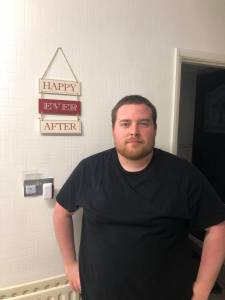
Sarah cut Lee’s hair, nice job.
No doubt this shift in emphasis from ‘stay at home’ to ‘stay alert’ will create challenges for many people. Over the coming weeks, we shall see who takes the initiative in understanding and adapting to the new regulations, and who lingers in empty rhetoric.
The weather has turned, with thick clouds, strong winds, and bitter cold. Sue kept busy throughout the day, first visiting Charlotte in Rothwell to drop off sweets for the boys, then cooking Sunday lunch, and later starting a new jigsaw. Meanwhile, apart from moving delicate potted plants into the greenhouse to protect them from the forecasted frosts and spending a frustrating hour trying to get my tablet to communicate with the Eye-Fi SD card in my camera, I felt lost and lethargic. I even spent an hour in bed during the afternoon! Is this the onset of lockdown syndrome?
Perhaps the most intriguing and thought-provoking thing I did today was read an article titled Lockdown Stockholm Syndrome. Written by Rob Slane, it is a well-researched blog questioning the validity of the UK’s lockdown approach, along with much of the world’s, by comparing it to Sweden’s handling of Covid-19. He applies the Imperial College model of viral infection, which the British government relies upon, to Sweden, with striking and eye-opening results. His analysis raises the question of whether the UK government’s stringent measures are based on flawed predictions and whether many other nations have followed suit based on questionable science. A persuasive and thought-provoking read!

Dual-purpose garments?
11th May 2020
Britons are now being advised to wear face masks on public transport and in certain shops where social distancing is not possible. After weeks of insisting there was little scientific evidence to support the effectiveness of such coverings in preventing the spread of coronavirus, the government has changed its stance.
Well, well, well, better late than never. Good news for T-shirt manufacturers, as we inevitably start cutting masks from their latest utility torso-wear range. I fully expect some enterprising soul to brand an exclusive design, complete with printed scissor lines to highlight their dual purpose!

A gorgeous hawthorn bush on my morning bike ride.
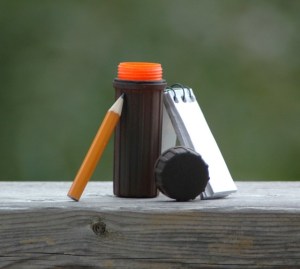
Micro-geocache.
After lunch, well wrapped up against a bitterly cold northern breeze, Sue and I went geocaching. Last week, we stumbled upon a magnetic micro geocache lying on a footpath, likely muggled and discarded. This morning, after a bit of online research, I found its original location alongside the Grand Union Canal, so we decided to return it.
A twenty-minute walk brought us to the spot, and since it was magnetic, we quickly identified the metal post it had originally been attached to. As is often the case, we had to wait a while for passing, socially distancing muggles to clear before discreetly restoring the cache. After logging its return online, we set off in search of three more caches on our excursion into the pandemic world.
The first proved frustrating; it was located near a bridge by a Traveller/Gypsy site where two young lads were noisily casting a rope with a large magnet into the water. Alongside the bank, they had already fished out a couple of old bikes and a metal ladder. They claimed to be “cleaning out the river to stop the fish dying.” We lingered for a while, listening and joining in their rather absurd chatter, but decided against searching for the cache while they were there.
Moving on to the next bridge, we spent 15 minutes rummaging through the hedge where the cache was meant to be hidden, but to no avail. Convinced it had been muggled, I logged a DNF (Did Not Find) online, and we moved on once more.
Returning to the first bridge, now thankfully clear of metal anglers, we soon discovered our prize and logged it as FOUND. The final cache of the day was a real conundrum. The clue, “six trees from one base”, led us to the right location, but no amount of foraging unearthed the micro-cache. Spiked and stung, we eventually admitted defeat and logged another DNF.
On the walk home, the sun finally deigned to throw out some warmth, and the day ended on a surprisingly pleasant note.
12th May 2020
Russia began slightly easing its nationwide lockdown today, despite its coronavirus cases continuing to surge. The country has now overtaken Spain to become the second-largest epidemic in the world, trailing only the United States. According to Russia’s health ministry, there are now 232,243 confirmed cases, following a week of daily increases exceeding 10,000.
Like Boris Johnson, Russia’s Prime Minister, Mikhail Mishustin, has already spent over a week in hospital after testing positive for the virus. Yet, what experts find most baffling is Russia’s suspiciously low official death toll, just 2,116. At around 13 deaths per million, it is far below the global average of 36 per million and significantly lower than other countries with comparable case numbers.
In a nation where deception and corruption are the norm, and, to some extent, largely accepted by its population, I suspect Mr Putin’s grip on power, much like his friend Mr Trump’s, will come under increasing pressure. Not exactly a recipe for a peaceful resolution to the end of a pandemic. We shall see.

Three girls sharing some downtime.
Disaster! A beautifully sunny morning turned rather sour. Returning from my morning cycle through an increasingly colourful and vibrant Leicestershire countryside, I noticed that the two fig trees growing against the fence had been frosted! The BBC weather forecaster had lied last night!
Checking my vegetable patch, I found that every single potato plant had been bitten by Jack Frost, along with my grapevines. For gardeners, May has always carried the risk of a late seasonal frost, and giving in to optimism is always something of a gamble. To a minor extent, I suppose there’s a comparison with those countries now moving into ‘ease-down’. Without accurate, unbiased data and authorities willing to tell the truth, their populations, like my fruit and vegetables, are going to suffer the consequences. I made a bad call by trusting the BBC when it assured me that temperatures would only dip below freezing in the north. If you can’t trust the BBC, who can you?
Sue completed another jigsaw and spent much of the day sorting through the mountain of official paperwork we’ve accumulated over the past few years, bank statements, insurance documents, government paraphernalia, and so on. I’m not sure whether she enjoys filing, but she does it well, and I’m more than happy to leave it in her hands. Somehow, in between, she also found time to respond online to members of the Tenbury Wells Memories Group as one of their Visual Storytellers (VST).
In the afternoon, we had a brief check-up-on-the-parents visit from Charlotte. She left with some coriander and lettuce plants from the greenhouse.
That evening, I sat down to check through a 3,000-word dissertation for Ruth, an assignment that, if not for lockdown, would have been a three-hour exam for her BSc (Hons) in Quantity Surveying & Commercial Management at Nottingham Trent University. It had been issued as an open-book exam to be completed over 24 hours. I suppose educational institutions have little choice but to adopt such measures if they’re to keep their courses on track.


Leave a comment